

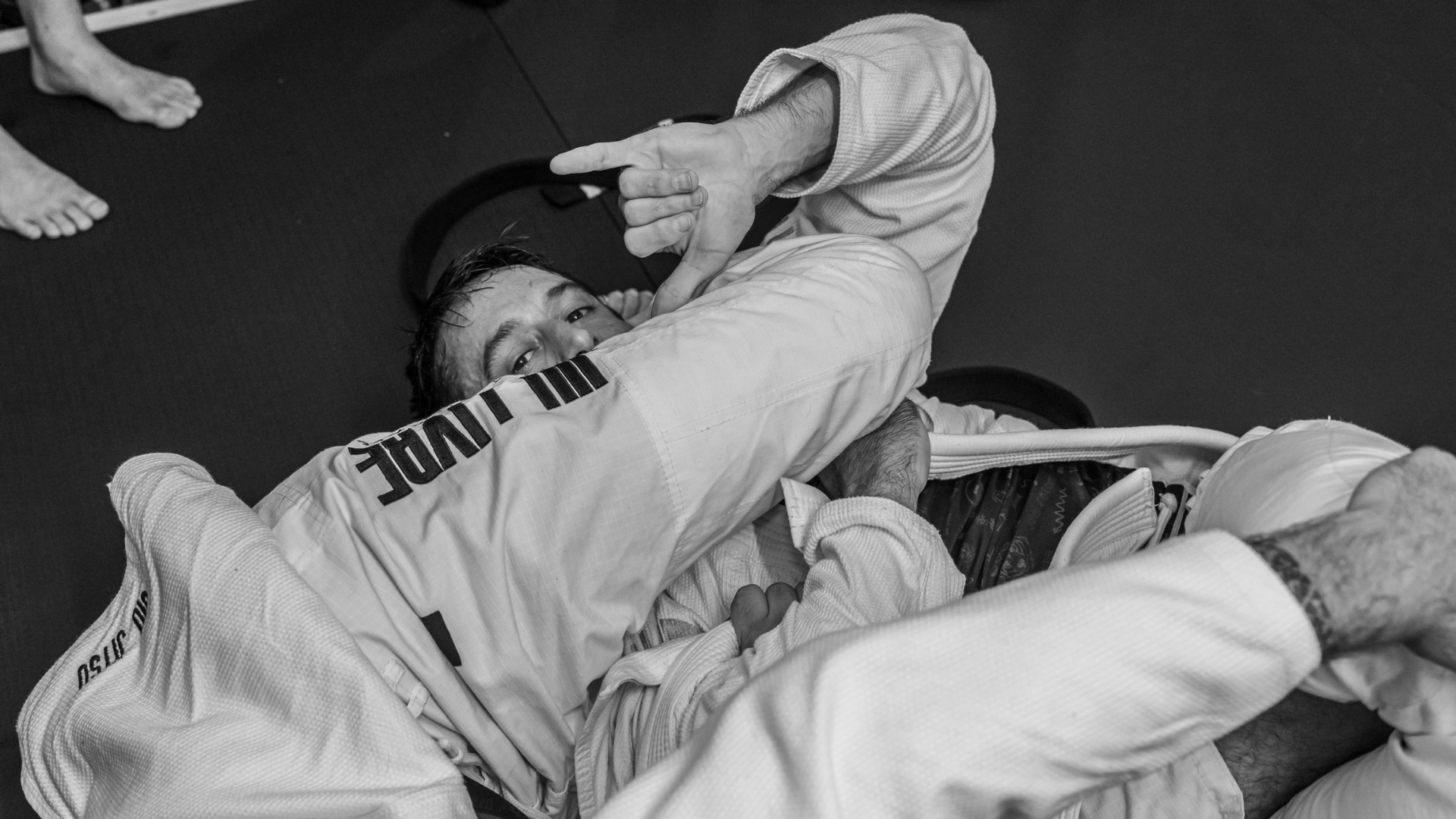
Interview by Sofia Campos
Photographs: Courtesy of Santiago Amaral

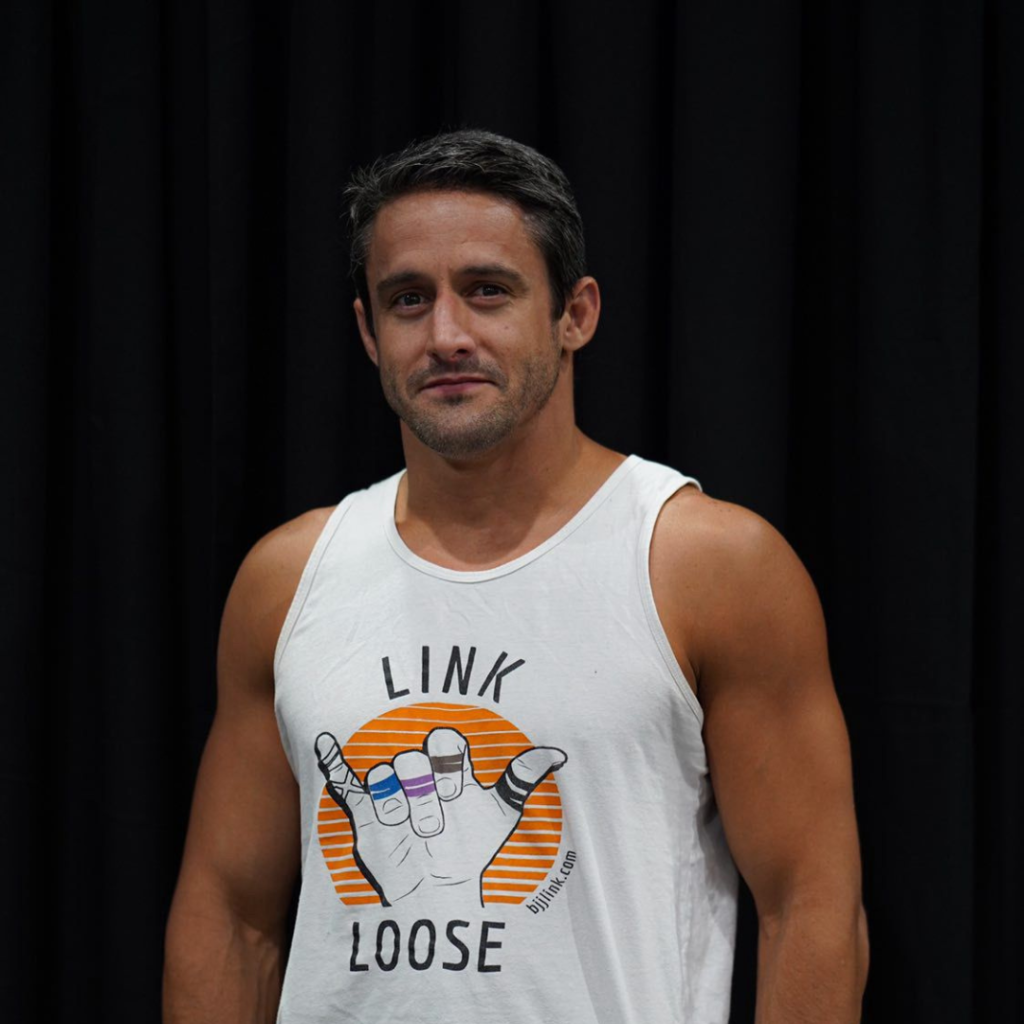
Jiu-jitsu is a martial art where discomfort is constant, progress is slow, and there is always someone better than you. For Santiago Amaral, these aspects are exactly what make it valuable.
Originally from Peru, Amaral has spent more than 16 years training Brazilian jiu-jitsu. It has become a lifelong discipline—one that has shaped how he understands community, perseverance, and personal growth. Today, he is the founder of BJJ Link, a digital platform present in 27 countries and built to connect practitioners worldwide, and co-founder of a jiu-jitsu academy in New York City.
In this conversation with Simple People, he reflects on what keeps people coming back to the mat, how jiu-jitsu creates community, and why learning to deal with pressure—repeatedly and in real time—extends far beyond the sport.

SIMPLE PEOPLE: When you started practicing in 2008, what did you find in Brazilian jiu-jitsu that you weren’t finding elsewhere?
SANTIAGO AMARAL: I started training in the U.S. because someone told me that jiu-jitsu was going to help with my anxiety and asthma. I was introduced to some Brazilian guy, and they actually lied to me and said that if he shaked my hand, that meant he liked me and that I had to start training. And, you know, every Brazilian or Latin American or South American will shake your hand no matter what. So I thought he liked me, and I started training in jiu-jitsu.
From day one, I got completely hooked, mostly by the community aspect that jiu-jitsu has, unlike any other sport. There’s a very unique experience in the difficulty of training a sport where every single time you’re practicing, you have someone trying to beat you, trying to make you humble, and really frustrating you day after day.
No matter what happens, there’s always going to be someone better than you—someone younger than you, older than you, training more or less than you. And the aspect of the endless learning and getting better with jiu-jitsu is really what got me hooked, while I was also doing very high-intensity sports like Ironman races and triathlons.
SP: Is there a philosophy from jiu-jitsu that you apply in your everyday life?
SA: To me, it’s really about staying humble. With jiu-jitsu, you learn that no matter where you go, we’re all equal.
No matter what you do or who you are, there’s always someone who is going to teach you something. And there’s always going to be a time where you have to understand that they’re better than you, and that’s okay.
And together, as a group, that makes us all stronger. It’s about being in a situation where someone is going to submit to you and you have to say, “I give up,” and then understand that that’s okay. Then you move on, and maybe next time it’s you submitting them.
SP: All sports give you a sense of belonging, but for jiu-jitsu it’s a core principle—the fact that everyone feels they belong to a community. Why do you think that is?
SA: Well, there are two different aspects. One is the fact that jiu-jitsu is an art. It’s a martial art, which means that everything you’re learning in jiu-jitsu, you’re then applying to yourself, right?
So, I always talk about my inner community. I have all these things going on inside my head that help me understand a technique and how I apply it to my own body, to my own age, to my own energy, to my flexibility. And that is something that no other sport can give you, because you are developing your own art, to use it with your body against someone else.
The other aspect that I see all the time is the overall jiu-jitsu community, which is something that is also very hard to find in other sports. Soccer, even triathlons, are really like single-person sports. But in jiu-jitsu, every time I go to the mats against someone that is better than me or worse than me, we’re always teaching each other something new.
Me helping you evolve to be a better jiu-jitsu practitioner helps me get better, and at the same time it helps you get better.
And there’s the extra aspect here in our community that you will never find. We can go against each other at 100%. I cannot do that in boxing, because if I go 100%, I will probably knock you down or you will knock me down.
In jiu-jitsu, we can go 100% until the other person taps out, and we stop, and we shake hands, and we hug, and we acknowledge each other. We are happy that we live another day to not be injured and continue going 100% at each other.
And that aspect of jiu-jitsu is very, very hard to beat, because you’re trusting someone at a different level.
Every time, we are literally fighting against these people and becoming friends at the same time. Every new academy creates friendships that I’ll probably keep for life. And at the same time, we’re learning from different styles, different evolutions of the game. It never ends.
So for me, the jiu-jitsu community is part of my vacations, my daily life, everything I do.
SP: As someone who is not originally from the U.S. and lives in New York, do you think jiu-jitsu has an extra layer for immigrants—a sense of belonging?
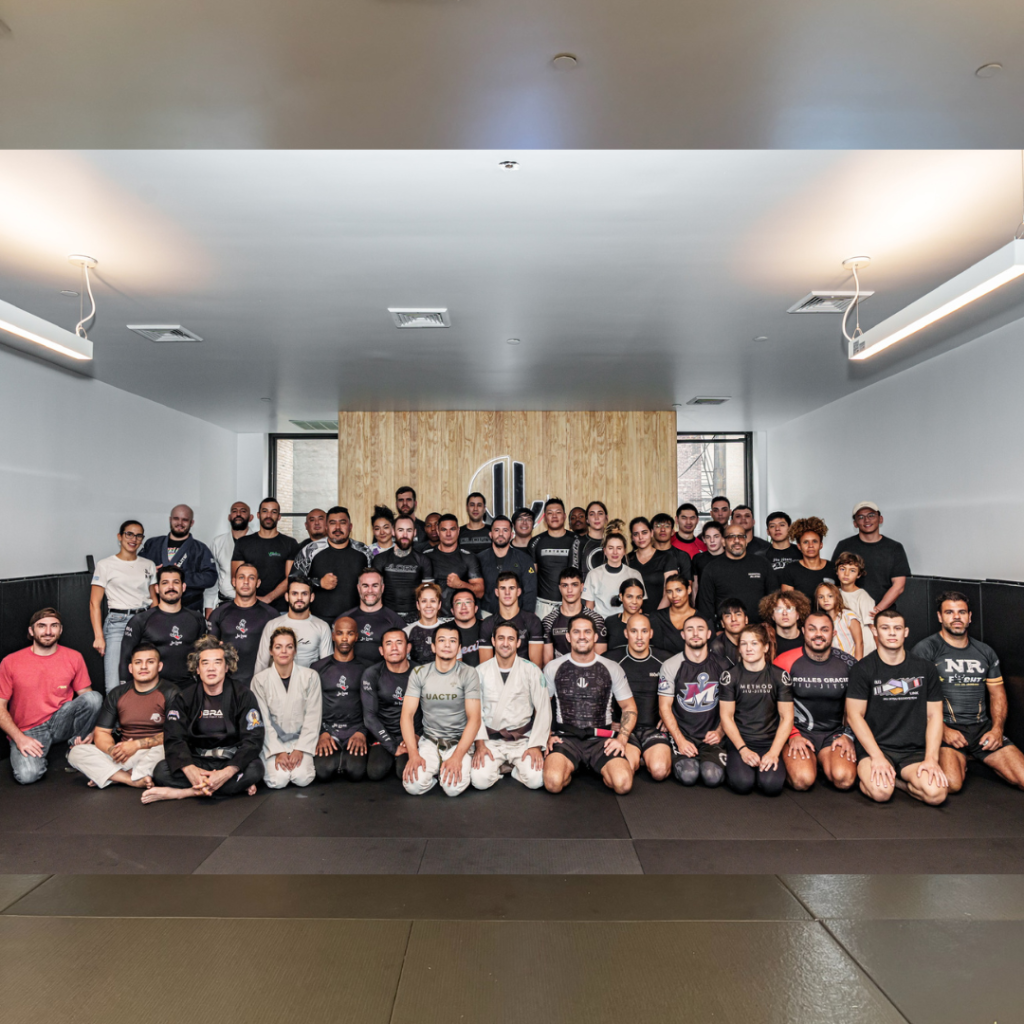
SA: I would say most jiu-jitsu schools are places where people find they belong. Especially in New York, where there’s such a wide spectrum of people. When we’re on the mats, we’re all the same. It’s a safe place to exchange ideas, train hard, and grow.
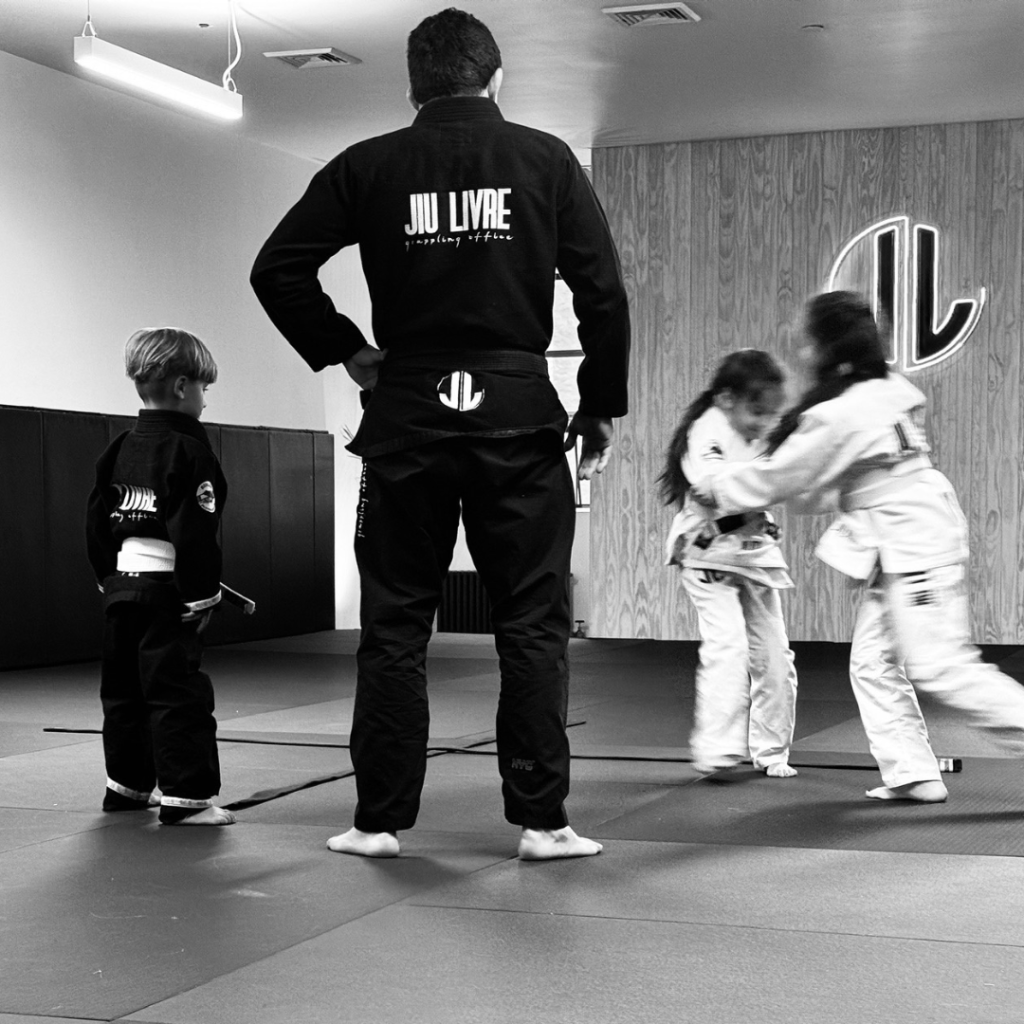
In our school, we try to be very welcoming, especially for beginners, because the first day is the hardest. It looks intimidating but we try to make it feel like family from the moment you walk in.
And it really becomes that. When someone has a problem, we help each other. For immigrants, it’s even more meaningful. In Peru or Argentina, we have family and friends. In the U.S., not always. So having this kind of community becomes really special.
SP: What inspired you to create BJJ Link?
SA: It was pretty straightforward. I came from a very “sportoholic” background—I had apps for football, triathlons, running. I was also very active on Instagram because my friends were in South America. When I moved from the East Coast to San Diego, I realized there was no way to find open mats or connect with people.
And then I started thinking: we do have tools to find people to run with or play football, right? So I decided to build an ecosystem to connect everyone.
I started competing at the Pan-American level, since the Pan-American Championship was very close to San Diego. And I noticed that people in Peru didn’t really have the opportunity to be at those competitions, mostly because they didn’t have access to the U.S. I wanted to connect with all those people.
That’s how BJJ Link started—as a small pet project, really my own pet project, to try to connect the community. Slowly, it evolved into a way to help academies better connect their internal communities, and also connect with the rest of the world. We grew, and now we’re in 27 countries.
Part of starting my second adventure with my academy in New York was also about stepping into my own product—BJJ Link—and experiencing it myself, to truly understand how it was helping communities by living it firsthand.
SP: What values from jiu-jitsu did you apply to building BJJ Link?
SA: Perseverance, right? That’s something we learn in jiu-jitsu. We’re always getting beaten by people we might never be able to beat, and still, we show up. We keep trying to figure things out.
Anyone who has started a business, or is an entrepreneur, understands that it’s a never-ending roller coaster. Every day you wake up thinking, I want to give this up. I’m done. This is enough. And I always had another job—I was working my “real” job while training jiu-jitsu and building this.
What jiu-jitsu gave me—and I also attribute some of this to running endurance races—is that mindset of not giving up. The difference is that in endurance races you might run for 16 or 17 hours straight, but here it’s every single day, over and over again, trying to figure things out.
And I say this applies to anything in life, not just entrepreneurship. It translated really well into my business, but it’s universal: every time we hit a roadblock, we find a way around it. Sometimes, in jiu-jitsu, you’re facing someone who has been training 10 more years than you and is double your size—maybe 100 pounds heavier—and, still, you find a way. And if you don’t, you learn something every single time you fall.
The only way to make things happen in life is by falling a lot—and standing up just as many times. So if you ask me what the biggest lesson is: fall, fall, fall. I always say, fall often and fall forward. Keep moving, keep stepping, keep going.
SP: Can jiu-jitsu be a form of active meditation?
SA: I would say yes. While training, you’re constantly thinking, adapting, and solving problems. I don’t like calling it “fighting”—I prefer “sparring”—but it is intense. You’re learning how to stay calm in difficult moments and think ahead. That, to me, is a form of meditation.
SP: Do you notice a difference between people who train and those who don’t?
SA: Yes, especially compared to people who don’t practice sports. Jiu-jitsu is very intense. You go through discomfort regularly, and that teaches you how to stay calm and present in daily life.
SP: What are people usually looking for when they start jiu-jitsu?
SA: It varies. Kids often come for anti-bullying. Adults come for self-defense or fitness. Some just want to lose weight, but then they realize they’re also playing a kind of chess game with their body, and they get hooked. Others try it and leave because of the intensity—it can be physically demanding.
SP: To finish—what do you want people to take with them from your community?
SA: It took me 16 years to get to my black belt in Brazilian jiu-jitsu. It is usually longer than any other martial art. It takes a long time. It’s easy for people to give up, right? So the moment I got it here in the U.S. from the Mao brothers and they asked me to give a quick speech I said: In the journey of jiu-jitsu, every class that you spend with someone, turn left, turn right, and acknowledge those guys that are helping you through your journey! Because it’s so long and it’s never going to end; so, you need to appreciate every single moment that you spend with these people, these friends, this community. Appreciate every person that helps you through the journey because they are putting a building block to become the better person you’re going to be if you stick with it.


