Testimonial written by Julia Sanchez*
Photographs and graphic excerpts: Courtesy of the author
Art by Valentina Taraborelli
If you’ve missed “My Journey Through Migraine #1”, read it here.
Dr. D. (2016)
I tried everything people suggested—I was determined to find a solution. One day, someone recommended a neurologist, Dr. D. The moment I stepped into his office, I noticed how at ease he was while speaking, how precise his questions were. Within minutes, he proposed a new treatment—a medication no one had ever mentioned before.
From what I understood, migraines are somewhat related to epilepsy. He prescribed an antiepileptic, starting at a low dose and gradually increasing it until I was pain-free. By that point, I had stopped believing that was even possible. Once I reached that state, we would maintain the dose for a while before tapering it off until I no longer needed it.
Topiramate. First 25 mg, then 50 mg.
Then, he introduced something else: a rescue medication—Eletriptan 40 mg, to be taken the moment I felt the aura begin.
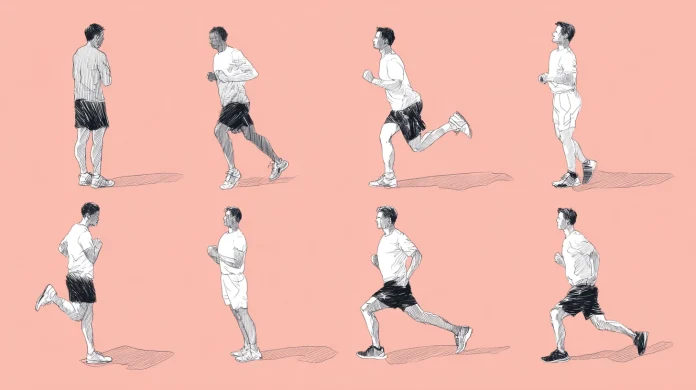
Another key part of the treatment was intense aerobic exercise. As he explained, the medication would improve blood circulation, and cardio would help my body adapt to that rhythm. That way, once I stopped taking the medication, my body would continue functioning the same way.
I walked out of his office and immediately bought the topiramate, and a bicycle—a black foldable Aurorita, which I still ride nine years later.
That’s how obedient I’ve always been. I have always trusted doctors, treatments, and anyone who told me they could relieve my migraines. I wanted to believe that one day this would be resolved.
I started the treatment, increased the dosage, and for a few months, I had no pain. Then, slowly, we tapered off the medication until I was down to zero.
Zero medication. Zero pain.

Eight Years of Happiness (2017–2024)
Living a life free of chronic pain was extraordinary. I would get maybe one migraine a year, always triggered by something specific—stress, intense emotions. I remember a few in particular: one during a tense situation at work, another when I found out a family member was ill.
Other than that, I only had regular headaches—the kind you take an ibuprofen or paracetamol for, and they simply disappear. Something that had once felt unimaginable. I cherished those moments. Sometimes, in sheer amazement, I’d think to myself: I used to have to leave because of the pain.
Dr. D. became a god to me.
In 2019, I quit smoking. In 2020, I started again. In 2023, I quit once more, and as of today, I’ve been smoke-free for one year, 254 days, and 15 hours.
At some point, I stumbled across a migraine meme account, @migranamemes, and for the first time, I laughed at migraines. I felt seen. I felt like I belonged—a space shared by people who truly understood what I had been through. A community where we could find humor in ourselves and in those who just didn’t get it.

That’s how I discovered @cefaloca, a neurologist specializing in headaches and neuralgias. Through her Instagram, I finally gained the theoretical knowledge behind what I had experienced firsthand. Between the dark humor of one account and the scientific explanations of the other, I laughed, and I learned.

I learned that the “lloriquín” (Spanish slang for our emergency migraine kit) should always be within reach.
That migraines aren’t cured—they’re managed.
That migraines are a chronic illness.
And for years, I was just an observer—a former migraine sufferer, watching from the sidelines.
Second Acts Are Never Good (2024)
In August 2024, they came back.
Without warning. Literally.
First, because they hit suddenly—one episode per week. Second, because this time, there was no aura.
The pain would start without notice, giving me no time to take medication. And I no longer had a rescue pill nearby because I had stopped needing it—or so I thought.
Many episodes began the moment I woke up. I’d open my eyes, and there it was: a crushing headache, so severe it was already too late to intervene. Stabbing pain, nausea, vomiting. Hours and hours like that.
Between frustration and anger, I resisted going to the ER. But I always ended up there.
After eight years, I saw those settings with new eyes. Some doctors checked for stroke symptoms; others didn’t. Follow my finger with your eyes. Squeeze my hand. Push your knee up against my hand. If they skipped it, I asked for it.
I also noticed stark differences in how doctors treated me. Female doctors asked the standard medical questions and prescribed treatment. Male doctors asked the same questions—but then dismissed my answers, only to prescribe the same treatment anyway.
My friend C. slept uncomfortably on a plastic chair to keep me company. So did my sister M., who happened to be visiting.
Eventually, I started going alone.
One time, I didn’t tell anyone. My friends scolded me for it. They were right.
The next time, I sent a message: “I’m going to the ER. I’ll be there for a while. I’ll update you when I’m out.” There was no point in dragging them along. But still, being there alone sometimes got to me.
After that first relapse, I scheduled an appointment with Dr. D.
He was surprised to see me again. He was sure migraines were flaring up due to emotional stress. He was right—it had been a difficult year.
I was about to turn 40. I had spent months feeling overwhelmed.
In 2023, I had been in therapy with a psychiatrist. After six months, I was discharged. By 2024, I relapsed—new diagnosis, new treatment.
Dr. D. prescribed the same plan as before. This time, I started directly with Topiramate 50 mg, one per day, plus the rescue medication.
Exercise wasn’t an issue—I had never stopped training since 2016.
I restarted my migraine diary.
It was me, my neurologist, my psychologist, my psychiatrist—we were all working together to keep this from happening again.
But the episodes kept coming. They kept me from working. I ended up in the ER, alone or with company.
By now, I knew the drill. I walked in and explained my condition like a professional:
“I’ve had an episode for eight hours. I took my rescue med—no effect. I tried sublingual ketorolac—nothing. I vomit everything I ingest. I took a sublingual anti-nausea pill—vomited again. I need IV medication.”
Then came the routine ER questions:
—Do you have a neurologist?
—Yes.
—Are you on preventive medication?
—Yes, Topiramate 50 mg.
—What’s your rescue med?
—Eletriptan 40 mg.
—Do you exercise?
—Five to six times a week.
—Do you keep a migraine diary?
—Yes.
One of the doctors looked at me and said, “You’re doing everything right.”
I looked back at her as if to say: I know. So why am I still feeling like this?
Tears. Powerlessness. Frustration.
The Topiramate eventually started working, reducing my migraines to one or two episodes per month. They mostly coincided with stressful periods or premenstrual days.
I spoke to my gynecologist to rule out hormonal issues. Everything was fine on that front.
No Punchline (2025–…)
It’s been seven months on Topiramate. Three months without a migraine.
I’ve come to realize that this is a lifelong battle, fought one day at a time.
What I’ve learned:
- There are no specific tests to diagnose migraines—keeping a migraine diary and seeing a neurologist is crucial.
- Triggers are different for everyone—you have to learn yours and avoid them.
- Medication is essential, but what works today might not work tomorrow.
- Emotions are deeply tied to migraines.
- It’s a chronic illness. There is no cure, only management.
- Exercise, no smoking, healthy eating, avoiding alcohol, and not going too long without food all make a difference.
I’ll finish this journal with a simple call for empathy:
If someone tells you they suffer from migraines, don’t assume ibuprofen or paracetamol will fix it. They probably need to go home or find a quiet space.
It’s not just a headache. And they’re not overreacting.

*Julia Sanchez is an Argentine actress, producer, and project manager. She has spent the past 12 years in Buenos Aires but grew up in the smaller town of Venado Tuerto with her parents and siblings.
Professionally, she has worked for several years in communication agencies, a field she is passionate about. She is also part of an independent theater company, where she collaborates in writing, directing, and performing as part of a creative collective.
Outside of work, Julia enjoys staying active and spending quality time with friends.