Written by Esteban Galarza
Medically reviewed by Susana Pontiggia (Psychologist, Specialist in Neuroscience and Human Behavioral Sciences, Consultant in Personal and Organizational Development)
In recent years, board games have seen a resurgence in popularity, with a growing demand for strategy-based games among both casual and hardcore gamers. The trend can be attributed in part to the widespread success of The Settlers of Catan, a board game that took the market by storm in 1995. Its rise paved the way for a new generation of board games, characterized by complex rules and immersive storytelling that captivate both children and adults. Over time, these games have even been incorporated into educational curricula. While learning through play is nothing new, the benefits of gamification are now more recognized than ever.
Board games are a powerful tool for mental health, enhancing socialization and reinforcing cognitive skills in both children and adults. Let’s take a closer look at some of these benefits.
Around the Board: How Board Games Help Children’s Cognitive and Social Skills
When Klaus Teuber released The Settlers of Catan in Germany in 1995, he likely never imagined that it would become a global phenomenon, ushering in a new era of board gaming. The game’s objective is to build settlements, cities, and roads on an ever-changing board while collecting resource cards to advance. Players earn points based on their resource management, and the first to reach 10 points wins. The game’s appeal lies in its combination of simple mechanics with a complex mix of strategy and chance. Beyond its entertainment value, Catan and similar games offer significant benefits for cognitive and social development.
Board games are a powerful tool for mental health, enhancing socialization and reinforcing cognitive skills in both children and adults.
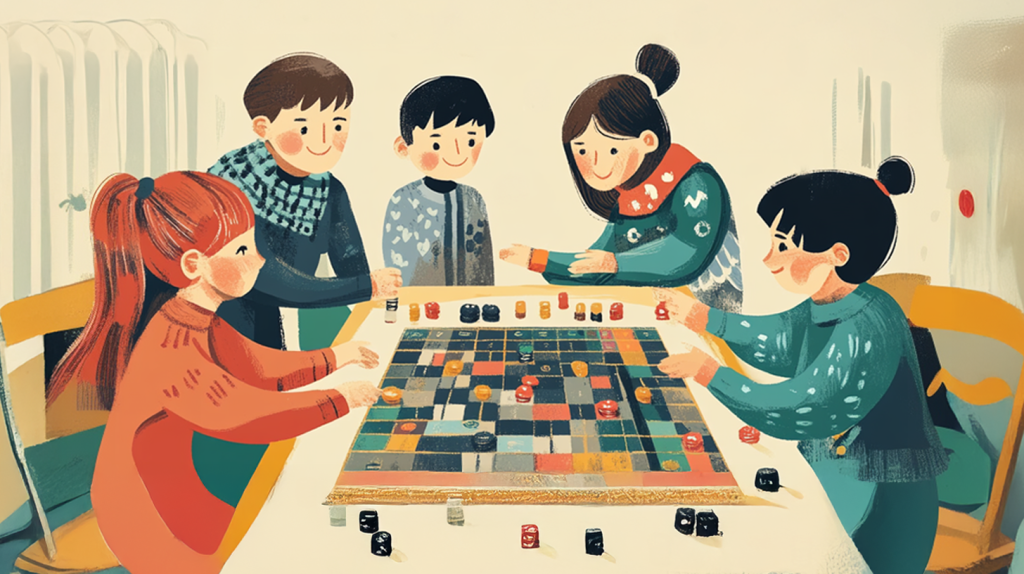
The positive impact of board games on childhood development has been studied for years, but their benefits became even more evident after the COVID-19 pandemic. One of their key advantages is that they require in-person interaction, encouraging socialization. Moreover, not all games are competitive; many emphasize collaboration. These social aspects of board gaming boost serotonin levels, improving mood and reducing anxiety.
Board games help children develop problem-solving skills, enhance cognitive functions, and even improve academic performance. Many games require players to make strategic decisions, fostering critical thinking, patience, and leadership skills.
Beyond learning, board games also serve as an emotional barometer. A child who struggles with losing or insists on winning at all costs may be displaying signs of deeper issues, such as family-related stress or a need for control. Hyper-competitiveness can sometimes be linked to overprotection or excessive pressure from caregivers. In this way, board games not only provide fun but also serve as a tool for recognizing and addressing underlying behavioral patterns.
The Role of Board Games in Preventing Cognitive Decline
While board games may not completely prevent cognitive diseases like Alzheimer’s, they have been proven to help maintain mental agility and strengthen cognitive functions as people age.
Board games not only provide fun but also serve as a tool for recognizing and addressing underlying behavioral patterns.
Achieving objectives within a game—whether progressing toward a goal or winning—boosts self-esteem and reduces stress. Engaging in recreational activities such as board games rekindles social connections and encourages strategic thinking. Players must also remember and follow rules, further stimulating cognitive function. However, not all board games offer the same benefits. Games with overly complex rules may cause frustration and increase anxiety, particularly for individuals with moderate cognitive decline.
On the other hand, traditional games like Mahjong have been shown to alleviate symptoms of depression. This Chinese game requires four players and involves 16 rounds of strategic tile matching to block opponents and optimize one’s own moves. The game’s relatively straightforward mechanics keep the mind active and engaged while fostering social interaction.
Choose Your Game: The Best Board Games for Mental Well-being
When we choose to spend our free time playing a board game, we are not only having fun—we are also giving our minds a workout. The resurgence of board gaming reflects a growing desire to step away from screens and engage in activities that promote relaxation and focus rather than stress and multitasking. Unlike video games, which can overstimulate and even lead to addiction, board games provide a balanced way to unwind while staying mentally active.
In a world of increasing demands and overstimulation, gathering around a board game offers a valuable opportunity to connect with others through fun, relaxation, and creativity—an essential ingredient for overall well-being.